Prebiotic Powder: How Inulin, FOS, GOS, XOS and Whole-Fruit Kiwifruit Compare
Prebiotic powders are not interchangeable. The main types differ up to 50-fold in daily dose, and they also differ in how fast they ferment, how much gas they produce and which gut bacteria they feed. For a formulator, those differences decide whether a product fits in a capsule and whether customers keep taking it after the first bloated week. Grams of fibre on the label tell you very little.
What a Prebiotic Powder Actually Is
A prebiotic is a substance that gut bacteria ferment in a way that benefits the person eating it. Most prebiotic powders on the market are single, purified carbohydrates: chains of fructose (inulin and FOS), galactose (GOS) or xylose (XOS), or resistant starch that escapes digestion in the small intestine. They are extracted or converted by enzymes or chemistry, dried and sold by the kilo.
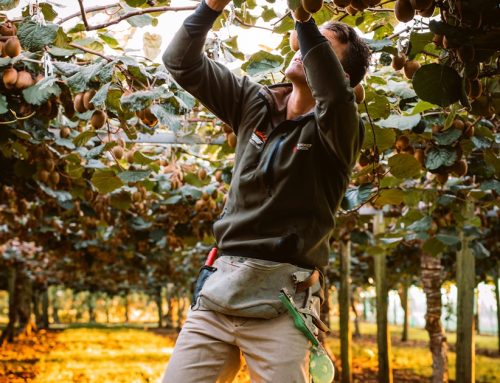
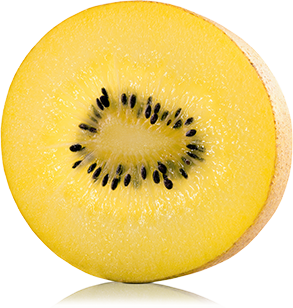
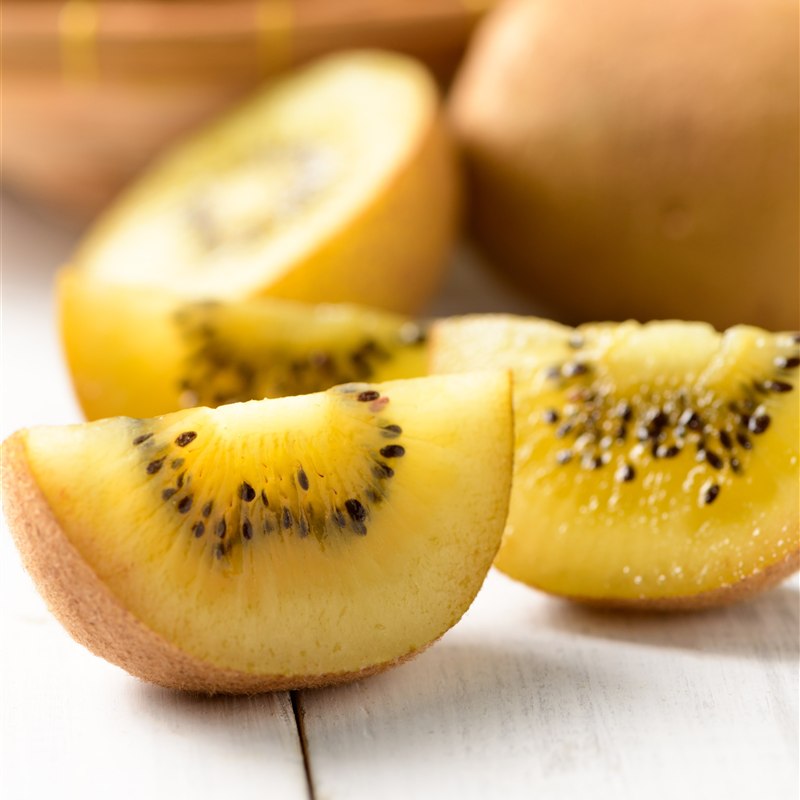
Whole-fruit powders belong in a separate group. Livaux® is New Zealand gold kiwifruit, seedless and skinless, freeze-dried whole using Anagenix’s Target Bio-Lock™ drying process. One ingredient carries the fruit’s soluble and insoluble fibre (including complex pectin), vitamins C and E, folate, polyphenols and actinidin.
The Five Types Side by Side
| Prebiotic | Source | Dose (mg/day) | Tolerance | Fermentation | Gas |
|---|---|---|---|---|---|
| Livaux® | NZ gold kiwifruit | 600 to 2,400 | Great (FODMAP friendly) | Slow | Some |
| GOS | Dairy (lactose) | 2,000 to 7,000 | OK | Fast | A lot |
| FOS/inulin | Chicory, artichoke | 10,000 to 20,000 | Poor | Fast | A lot |
| XOS | Sugarcane, corn | 1,000 to 4,000 | OK | Fast | A lot |
| Resistant starch | Corn, green banana, wheat, potato | 3,000 to 30,000 | Good | Medium | A lot |
Source: Anagenix, “How Livaux® compares (vs other prebiotics)” factsheet. All five feed bifidobacteria and lactobacilli; for Livaux® that finding is from in vitro work, while its effect on F. prausnitzii comes from human trials.
Inulin and FOS: Cheap and Familiar, but Dose and Gas Are the Catch
Inulin is the default prebiotic powder for good reasons. It is cheap, easy to source from chicory root and reliably feeds bifidobacteria. The trouble starts at the formulation bench.
At 10 to 20 g a day, the working dose of FOS or inulin will not fit in a capsule or a small stick pack. It ends up as a scoop of powder or a fortified food. It also ferments fast, and fast fermentation in the colon means a lot of gas in a short time. Inulin and FOS are fructans, one of the oligosaccharides that put the “O” in FODMAP, and their tolerance rates poor. Products sold for sensitive guts fail fastest with a fast fermenter, because those customers stop taking them.
For a compound-by-compound breakdown, see the full Livaux vs inulin comparison.
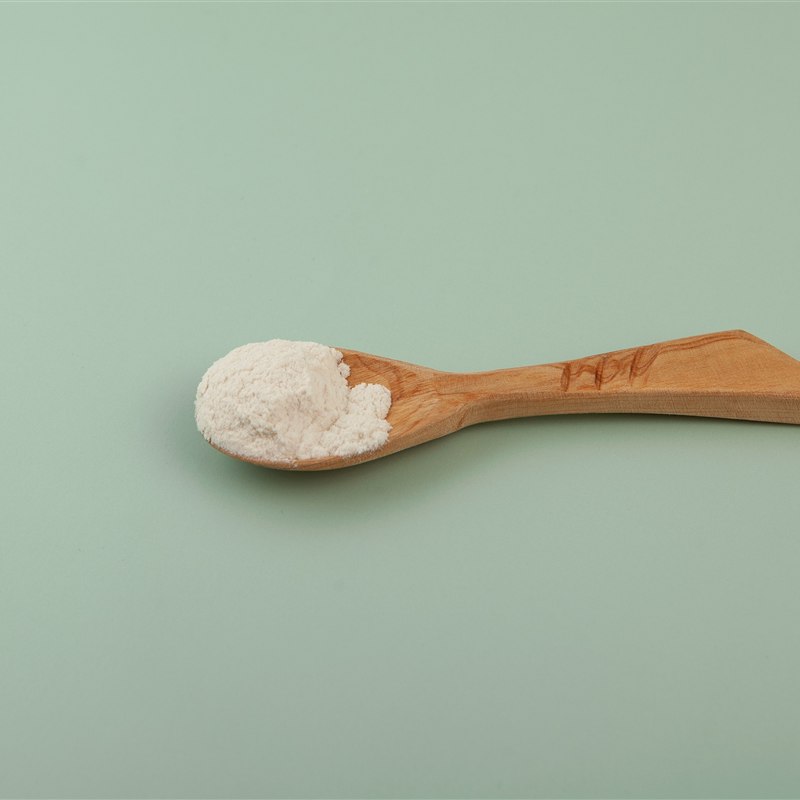
GOS, XOS and Resistant Starch
GOS (from lactose) and XOS (from sugarcane or corn) work at lower doses, 2 to 7 g and 1 to 4 g a day. Both feed bifidobacteria and lactobacilli, and both still ferment fast and make a lot of gas. GOS comes from dairy, which rules it out of a vegan claim.
Resistant starch is the best tolerated of the purified options and has a neutral flavour. Its dose range is the widest, 3 g to 30 g a day, and it still produces plenty of gas.
Whole-Fruit Kiwifruit Powder: A Different Kind of Prebiotic
Livaux® works at 600 mg a day, small enough for a capsule. It also has human data on a target most prebiotics are never tested against.
Feeding F. prausnitzii, not only bifidobacteria
Faecalibacterium prausnitzii is one of the main butyrate producers in the colon. In a 4-week randomised, double-blind, placebo-controlled trial in healthy adults with constipation (n = 45), 600 mg of Livaux® a day raised the relative abundance of F. prausnitzii from baseline (p = 0.047), doubling it in 70% of participants. Weekly complete spontaneous bowel movements rose by 1.78 and stools were softer, both compared with baseline. In a separate crossover trial at 2,400 mg a day, functionally constipated participants (n = 9) saw F. prausnitzii double, from 3.4% to 7.0% (p = 0.024).
Slow fermentation, less gas
Livaux® ferments slowly and produces “some” gas, against “a lot” for every purified prebiotic in the table. The published 600 mg trial (McKeen et al., 2025) reported less bloating and fewer hydrogen-consuming gut species, which the authors describe as consistent with slow fermentation.
Low FODMAP at the clinical dose
Livaux® is Monash University Low FODMAP certified for up to 1 g per serving, which covers the 600 mg dose. A composition study also found 41 phenolic compounds in Livaux®, against 9 in inulin. For the physical side of kiwifruit fibre, see how kiwifruit fibre holds water in the gut on the Actazin® site, and for the clinical detail, the science of Livaux.
Choosing a Prebiotic Powder for a Formula
Start from the format and the customer, then pick the prebiotic.
- Capsules and tablets: dose decides. Livaux® at 600 mg fits. Inulin at 10 g does not.
- Sachets and stick packs: XOS, GOS and Livaux® all fit; inulin pushes the pack size up.
- Drinks and gummies: flavour matters. Livaux® tastes naturally sweet and tropical; resistant starch is neutral.
- Products for people who bloat easily: choose a slow fermenter that is low FODMAP at its working dose.
- Vegan claims: leave out GOS.
If a brief asks for “gentle”, “capsule” and “clinically studied” in the same sentence, the purified fibres drop out fast. More on the ingredient itself is in kiwifruit powder as a precision prebiotic. To test it against the inulin in your current formula, request Livaux specifications and samples from Anagenix.
Frequently Asked Questions
What dose of Livaux does a formula need?
Livaux works at 600 to 2,400 mg a day, a capsule-sized dose. For comparison, XOS needs 1 to 4 g, GOS 2 to 7 g, resistant starch 3 to 30 g and inulin or FOS 10 to 20 g a day.
Is Livaux suitable for a low FODMAP product?
Yes, within limits. Livaux is Monash University Low FODMAP certified for up to 1 g per serving, which covers the 600 mg clinical dose.
Can Livaux go into gummies or drinks?
Yes. Livaux has a naturally sweet, tropical taste, so it adds flavour rather than needing to be masked. Resistant starch is neutral and suits a base where flavour must stay out of the way. Request specifications and samples to test a specific base.
How does slow fermentation affect tolerability in a finished product?
Livaux ferments slowly and produces some gas, against a lot for the purified prebiotics in the table. The published 600 mg trial (McKeen et al., 2025) reported less bloating, which the authors describe as consistent with slow fermentation.